Veterinary Nurses Champion Health and Safety through Day One Competences...
Read More
ACOVENE Launches New Biannual Newsletter
03/02/2026

Veterinary nursing in Norway
07/03/2026Emergency and Critical Care (ECC) Nursing
Evelien Goyvaerts RVN from Belgium qualified in 2015 as a veterinary nurse from the Thomas More University for Applied Sciences in Belgium and started working in a referral clinic where she soon gained the responsibility of heading the hospitalisation department.
‘And it’s here where I developed my particular interest in emergency and critical care.’ In 2020 she started the course (Improve International) for the VN certificate in emergency and critical care (ECC) nursing.
Move across the Channel – and back
‘The insights I gained through this course motivated me to seek employment in the UK.’ Thanks to the ACOVENE-accreditation of Thomas More, she was registered without further exams as an RVN in the UK. ‘I worked for one year in a speciality referral clinic (The Ralph), at the hospitalisation department and intensive care unit, where I could apply my knowledge in practice.’ Back in Belgium, she returned to her original referral clinic, now as a Head Veterinary Nurse, but kept looking for challenges. ‘In 2024 I started the American programme to become a veterinary technician specialist in emergency and critical care (ECC) nursing, while doing an internship at the veterinary faculty in Utrecht.’
Why Emergency and Critical Care?
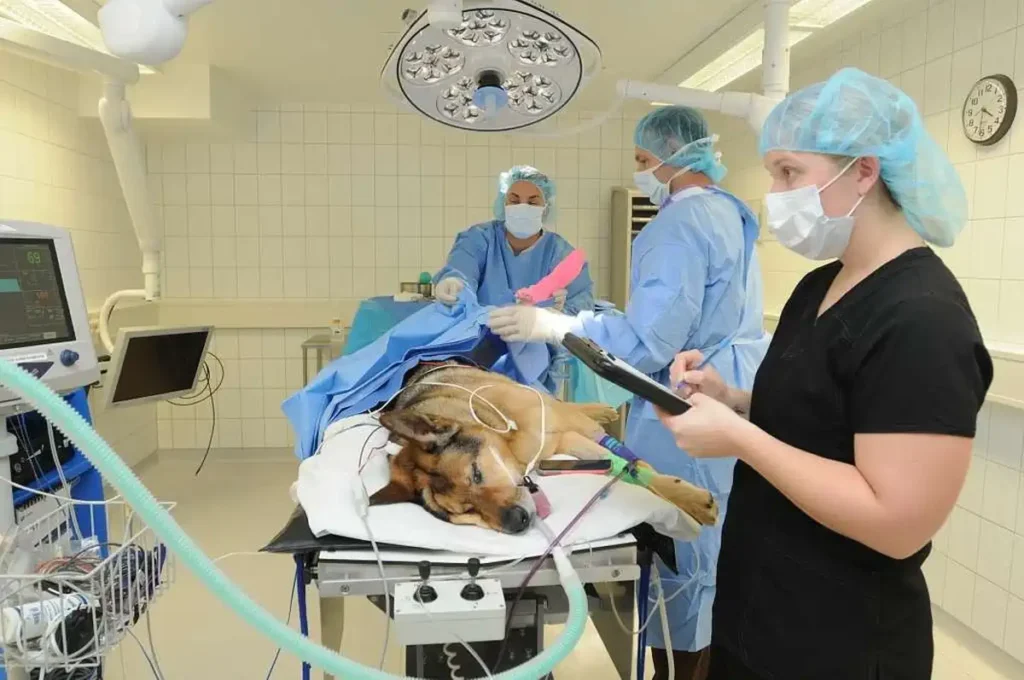
‘I love ECC! I love the impact you can make as part of a team, and it’s incredibly rewarding to see an intensive care patient recover and go home. In cases like these, you build a strong bond with the patient and its owner. I also get a lot of satisfaction from situations where I have to think on my feet and where my specialty knowledge as a VN really makes a difference. Every emergency case has its own challenges and learning moments, which keeps my work varied and interesting.’
ACOVENE, ‘making the decision to working abroad an easy one’
‘As my degree is from a training centre that has been accredited by ACOVENE, it was easy to become a Registered Veterinary Nurse (RVN). I could trust the registration process, making my decision to go and work in the UK an easy one. Thanks to this trust, I could fulfil my ambition, leading to a great experience and a wealth of knowledge. It allowed me to realise that the career and skills of a veterinary nurse don’t stop at the Belgian border!’
Evelien Goyvaerts lectured to a fully packed auditorium at the FECAVA Euro Congress in Antwerp in September 2025: Her concepts were well received by her peers and acclaimed by the audience in general. Her subjects were : The use and placement of feeding tubes; Nursing care of the pancreatic patients; and The correct calculation of dilutions and constant-rate infusions.
*In some countries, they are called veterinary technicians, veterinary auxiliaries, para-veterinarians or simply carers for sick animals. European standards for the education and training of these professionals have been set up by ACOVENE.
DISCLAIMER: Please note that what veterinary nurses can and cannot do legally may differ per country.
(©Photo Evelien Goyvaerts)
Related blog posts
Five myths about veterinary nurses
Common Myths: Do Veterinary Nurses Perform Diagnosis or Surgery? A...
Read MoreWorld Zoonoses Day: Expert Insights on Nursing Patients with Zoonotic Diseases
World Zoonoses Day Expert Insights on Nursing Patients with Zoonotic...
Read More