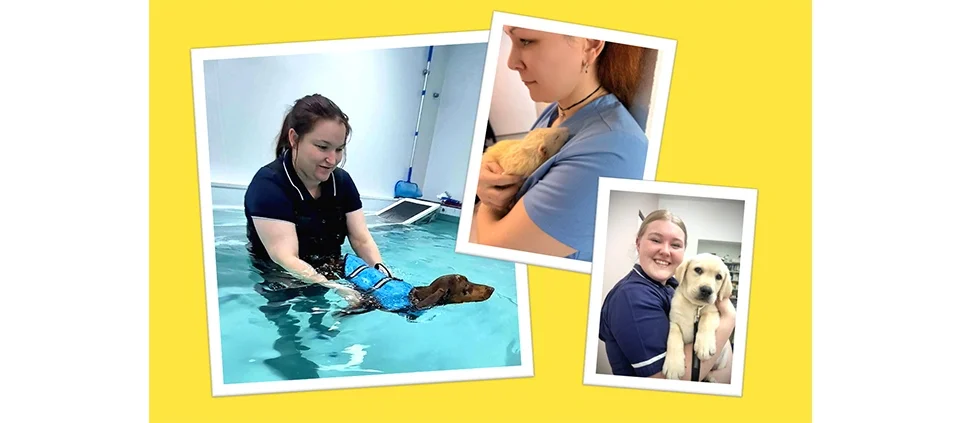

Overall, the veterinary nurse profession in the Netherlands is well-trained, regulated and increasingly recognised as...
Read More
Veterinary nursing in focus: meet the winners of the Acovene Photo Contest 2026
30/06/2026
Raising standards in veterinary nurse education: a conversation with Dr Krista Arnold
29/07/2026Veterinary nursing in Portugal is built on a solid educational foundation, with all veterinary nurses trained through higher education and access to advanced academic opportunities. At the same time, the profession continues to face challenges related to recognition, salaries and career advancement.
A strong foundation for veterinary nursing
Last summer, the veterinary nursing programme at the Agrarian School of Viseu – Polytechnic University of Viseu (ESAV-IPV) successfully renewed its Acovene accreditation, while the Bachelor’s degree in Veterinary Nursing at EgaZ Moniz School of Health and Science achieved initial provisional Acovene accreditation.
According to Cristina Mega de Andrade, Acovene coordinator for the veterinary nursing programme at ESAV-IPV, veterinary nursing in Portugal has undergone remarkable development in recent years. “We have seen significant growth, both in veterinary nursing programmes and in the number of qualified professionals entering the workforce. The profession is becoming increasingly visible and valued within veterinary teams.”
Today, veterinary nursing in Portugal is supported by a strong educational framework and growing opportunities for professional development. Nevertheless, the profession continues to face challenges relating to recognition, career progression and employment conditions.
Veterinary nurses in Portugal: a growing and highly qualified workforce
It is estimated that Portugal has between 2,500 and 3,000 veterinary nurses, compared to approximately 7,000 veterinary surgeons. The country also has 1,632 registered veterinary practices, suggesting an average of two veterinary nurses per practice.
One distinctive feature of the Portuguese profession is the use of the title “veterinary nurse” (enfermeira veterinária). “In Portugal, this title is reserved exclusively for professionals who have completed a three-year higher education programme,” explains Cristina. This gives the title a clear educational meaning and ensures a high level of professional preparation.”
Persons without this qualification are known as assistente de veterinária or veterinary assistants.
The first Master’s degree in companion animal nursing in Europe
Veterinary nursing education has expanded considerably in the country. Until three years ago, Portugal had just five veterinary nursing schools; today there are eight, of which two have accredited nursing programmes (ESAV-IPV and the Egaz Moniz School of Health and Science). The standard qualification requires three years of higher education, while a growing number of postgraduate opportunities are available through both public and private institutions. Portugal has also played a pioneering role in advanced veterinary nursing education. In the 2015–2016 academic year, public higher education institutions introduced the first Master’s degree in Companion Animal Nursing in Europe. Today, this programme is offered by ESAV and four other public universities. “The introduction of a Master’s degree was an important milestone, Cristina adds. “It demonstrated that veterinary nursing is a profession with opportunities for lifelong learning, advanced practice and academic development.”
Portuguese veterinary nurses: highly trained but unregulated and underpaid
Despite these achievements, veterinary nursing is not yet a regulated profession in Portugal. The title is not legally protected and there is currently no mandatory professional registration system. As a result, public recognition remains one of the profession’s principal concerns, alongside salaries and job satisfaction. “Portuguese veterinary nurses are highly trained, but many feel that public awareness of their expertise has not yet caught up with the reality of their role within veterinary practice.”
Employment opportunities for VNs at home and abroad
Employment prospects for qualified veterinary nurses are generally positive – for those willing to relocate. However, salaries in Portugal remain lower than in many other European countries, while employment opportunities are often concentrated in larger cities where living costs are higher. This can make relocation financially challenging for some professionals. These factors help explain why many Portuguese veterinary nurses pursue careers elsewhere in Europe, particularly in the United Kingdom and other countries where remuneration may be more competitive. “There is no shortage of opportunities for veterinary nurses,” resumes Cristina. “The challenge is ensuring that employment conditions allow professionals to build sustainable careers within Portugal.”
Looking ahead: more recognition and opportunities
Portugal’s veterinary nursing profession has built a strong educational foundation and developed a highly qualified workforce. Continued investment in education, professional recognition and career development will be essential to support future growth.
As Cristina Mega de Andrade concludes: “The profession has made enormous progress over the past decade. Our next goal is to ensure that veterinary nurses receive the recognition and opportunities that match their qualifications and contribution to animal healthcare.”
DISCLAIMER: Please note that what veterinary nurses can and cannot do legally may differ per country.
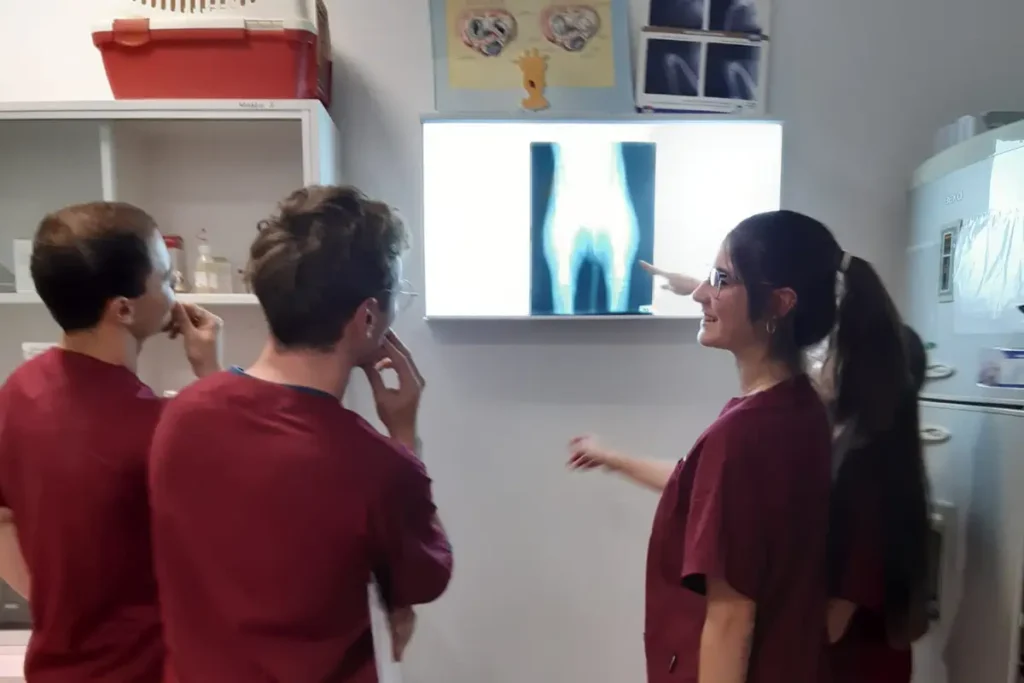
(©Photo Cristina Mega de Andrade)
Related blog posts

“Accreditation facilitated my move to the UK”
Emergency and Critical Care (ECC) Nursing Evelien Goyvaerts RVN from...
Read More
Veterinary nursing in Norway
Veterinary nursing in Norway: a small but diverse profession Norway...
Read More